Mosquitoes
Culicidae
The deadliest animal on earth — even in your backyard.
Mosquitoes transmit more diseases than any other animal on earth. Even in the US, West Nile, EEE, and Zika are documented risks.
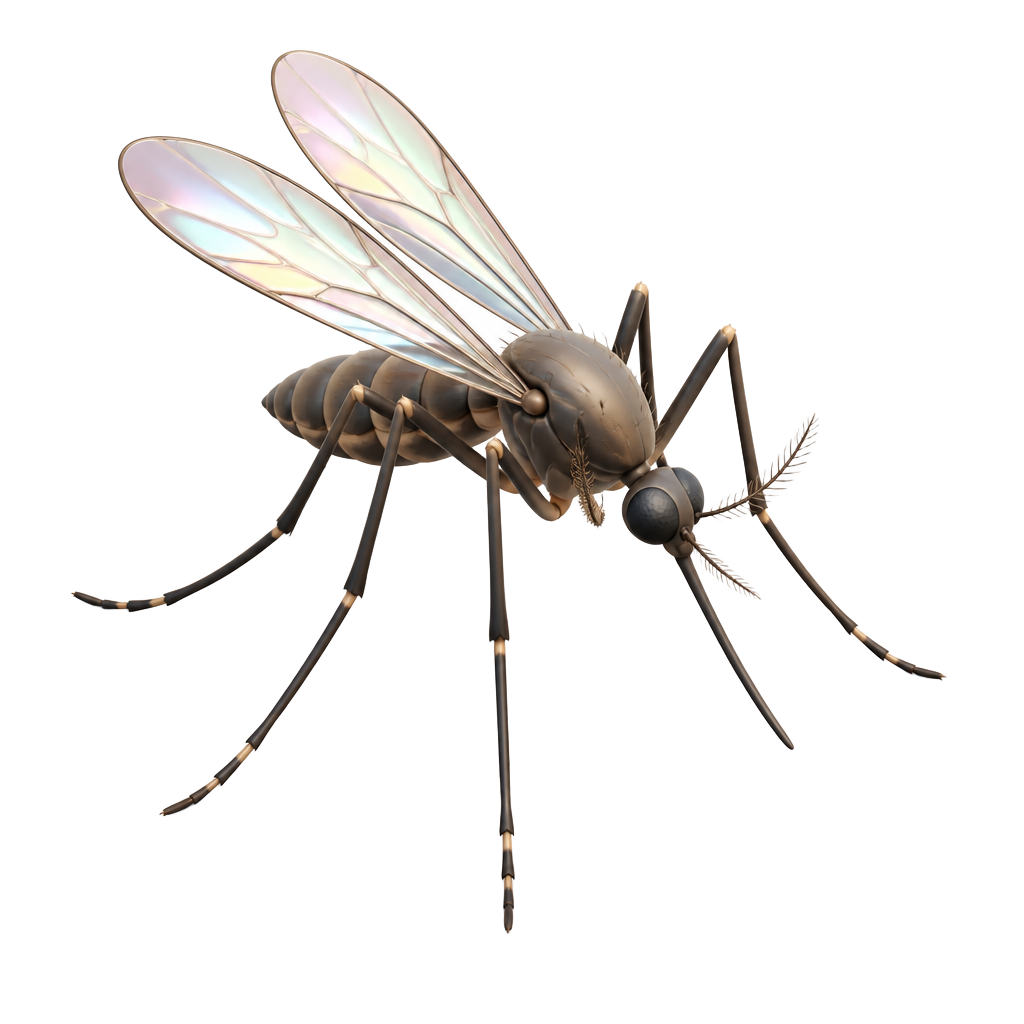
At a glance
- Category
- insect
- Seasonal activity
- Peak: Late spring through first frost.
- Life cycle
- Egg → larva → pupa → adult in 7–14 days depending on temperature.
- Common locations
- Standing water · Bird baths · Clogged gutters · Tall grass · Tree holes
- Also known as
- skeeters
Entity relationships
Parent entity
Related entities
Key attributes
Risk profile
A quick read on how this pest scores across the four factors that matter most.
- Health risk
- High
- Property damage
- None
- Spread potential
- High
- Treatment difficulty
- Moderate
Seasonal activity
When this pest is most active across the calendar year.
Identification & habitat
Confirm what you're dealing with before choosing a treatment path.
How to identify
- Only females bite — need blood for egg production
- Aquatic wriggler larvae in standing water
- Bites cluster around dawn and dusk
Where they live
- Bird baths
- Clogged gutters
- Tarps
- Tree holes
- Shaded humid foliage
Signs of infestation
- Bites during dawn or dusk
- Larvae wriggling in standing water
- High mosquito counts near shaded, humid areas
Behavior
- Rest on shaded undersides of leaves during day
- Attracted to CO₂, body heat, and dark colors
Reproduction
Females lay 100–400 eggs per batch in still water; hatch within days.
Life cycle timeline
Every treatment plan must reach every stage — miss one, and the population rebuilds.
- Stage 11–3 days
Egg
Laid on or near still water.
- Stage 24–14 days
Larva (wriggler)
Filter-feeds in standing water.
- Stage 31–4 days
Pupa (tumbler)
Non-feeding transformation stage.
- Stage 42–8 weeks
Adult
Females bite; males feed on nectar.
Health risks
- West Nile virus
- Eastern Equine Encephalitis
- Zika virus
- Heartworm in pets
Inspection checklist
- Walk the yard after rain — dump every container holding water
- Check gutters and downspouts for standing water
- Inspect low spots, tarps, and pool covers
- Screen rain barrels and repair torn window screens
Professional treatment
The proven, licensed protocol our specialists use in the field.
- 1
Yard audit
Identify and eliminate every larval breeding source.
- 2
Barrier spray on foliage
Residual treatment on undersides of leaves 3–8 ft up.
- 3
In2Care mosquito stations
Autodissemination stations spread larvicide to hidden breeding sites.
- 4
Special-event fogging
Same-day ULV knock-down for events.
You can handle
- Weekly water dump routine
- Repair screens and install door sweeps
- EPA-registered repellents
Get professional help
- Yard-scale mosquito reduction
- Recurring seasonal service
- Backyard weddings and events
What changes the price
- Yard size
- Foliage density
- In2Care station count
- Number of monthly treatments
Prevention
Small habits keep mosquitoes from coming back after treatment.
Prevent mosquitoes
- Empty containers holding water weekly
- Clean gutters and screen rain barrels
- Repair torn window screens
- Trim tall grass and dense shrubs
Commonly confused with
Quick tells to separate mosquitoes from lookalikes.
vs. Midges / gnats
Don't bite; often mistaken for mosquitoes.
Common myths
Bad advice makes infestations worse — here's the truth.
Bug zappers control mosquitoes.
Zappers kill mostly harmless moths; mosquitoes ignore UV light.
Citronella candles create a bubble.
Coverage is measured in inches, not feet — repellents on skin work; candles don't.
Frequently asked
Answers to the questions homeowners ask most about mosquitoes.
Are mosquito treatments safe for kids and pets?
Once dry (30–60 minutes), EPA-registered treatments are safe for family and pets to reenter the yard.
How long does a treatment last?
Barrier sprays typically hold 21–28 days; heavy rain can shorten longevity.
Call a pro immediately if…
- Recurring bites in own yard
- Standing water sources you can't eliminate
- Hosting outdoor events
Answer your next question
Related Services
Related Costs
Related Calculators
Related Locations
Related Questions
Ready when you are
Deal with mosquitoes the right way
Get a licensed pest specialist to handle it — often same-day, with a satisfaction guarantee.