Carpenter Ants
Camponotus spp.
The largest ant in North America — and a quiet structural threat.
Carpenter ants excavate galleries in moist or damaged wood to build nests. Unlike termites, they don't eat the wood — but structural damage can be extensive.
At a glance
- Category
- insect
- Seasonal activity
- Peak: Late spring and summer swarming.
- Life cycle
- Colonies mature in 3–6 years; queens live up to 25 years.
- Common locations
- Damp framing · Window sills · Roof lines · Decks
- Also known as
- large black ants, wood ants
Entity relationships
Parent entity
Related entities
Key attributes
Risk profile
A quick read on how this pest scores across the four factors that matter most.
- Health risk
- Low
- Property damage
- High
- Spread potential
- Moderate
- Treatment difficulty
- High
Seasonal activity
When this pest is most active across the calendar year.
Identification & habitat
Confirm what you're dealing with before choosing a treatment path.
How to identify
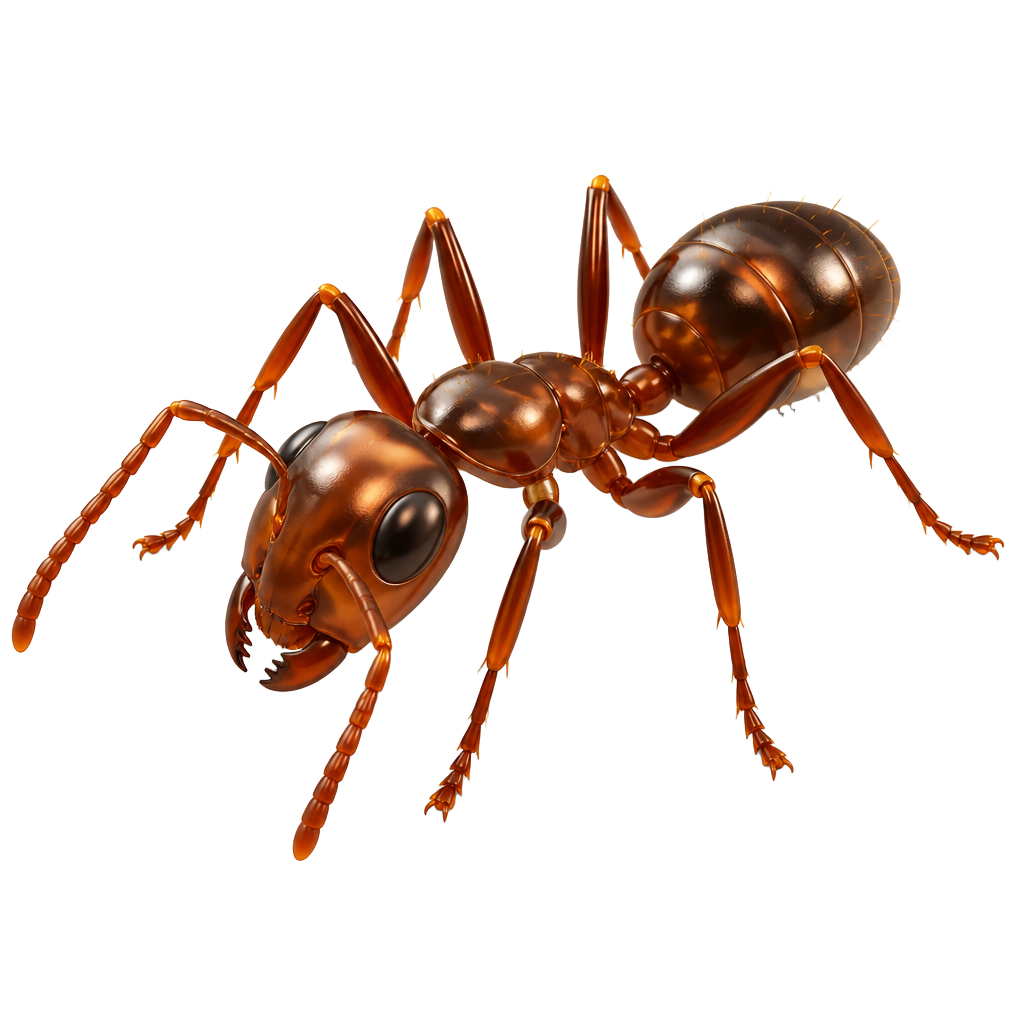
- Large black or reddish-black ants over 1/2 inch
- Smooth, evenly rounded thorax
- Single node between thorax and abdomen
- Piles of coarse sawdust (frass) beneath galleries
Where they live
- Moisture-damaged framing
- Window and door sills
- Roof leaks
- Hollow doors
- Dead trees and stumps
Signs of infestation
- Piles of coarse sawdust (frass)
- Winged swarmers indoors
- Faint rustling in walls
- Large black ants over 1/2 inch long
Behavior
- Do not eat wood — excavate smooth galleries
- Peak foraging at night
- Follow satellite trails hundreds of feet
Reproduction
Parent colony (with queen) plus satellite colonies of workers and older brood.
US distribution
Every US state; heaviest in Pacific Northwest, Northeast, and Great Lakes.
Life cycle timeline
Every treatment plan must reach every stage — miss one, and the population rebuilds.
- Stage 124 days
Egg
Laid deep in parent colony chambers.
- Stage 221 days
Larva
Fed by workers with regurgitated protein.
- Stage 321 days
Pupa
Cocooned stage that emerges as adult.
- Stage 47+ years worker · 25 years queen
Adult
Casts include workers, majors, and swarmers.
Health risks
- Painful bite when disturbed
Property damage
- Excavated galleries in structural wood
- Weakened framing and trim
Inspection checklist
- Tap suspect wood — hollow sound suggests galleries
- Look under sinks, around tubs, and at roof-wall junctions
- Inspect exterior for moisture stains and peeling paint
- Check crawlspaces for frass piles
- Listen for faint rustling in walls at night
Professional treatment
The proven, licensed protocol our specialists use in the field.
- 1
Locate the parent colony
Track workers with sugar/protein baits back to the nest.
- 2
Direct void injection
Non-repellent dust applied into galleries.
- 3
Perimeter barrier
Non-repellent liquid around foundation and satellite areas.
- 4
Moisture correction
Repair leaks and replace damaged wood.
You can handle
- Fix roof and plumbing leaks
- Trim branches off the roof
- Store firewood 20 ft from siding
Get professional help
- Any confirmed carpenter ant sighting indoors
- Frass or gallery evidence
- Multi-year recurrence
What changes the price
- Home size
- Ease of colony access
- Moisture repair requirements
- Multiple satellite colonies
Prevention
Small habits keep carpenter ants from coming back after treatment.
Prevent carpenter ants
- Fix roof leaks and plumbing drips
- Replace moisture-damaged wood
- Store firewood 20 ft from the house
- Keep tree branches trimmed off the roof
Commonly confused with
Quick tells to separate carpenter ants from lookalikes.
vs. Subterranean termites
Build mud tubes and consume wood — carpenter ants leave clean galleries and sawdust.
vs. Odorous house ants
1/8" long, sweet forager; carpenter ants are 3–5× larger with structural nesting.
Common myths
Bad advice makes infestations worse — here's the truth.
Carpenter ants eat wood.
They only excavate it — but the structural loss is real, especially in load-bearing framing.
Frass = termites.
Termite frass is pellet-shaped; carpenter ant frass is coarse and often mixed with insect parts.
Frequently asked
Answers to the questions homeowners ask most about carpenter ants.
Carpenter ants vs. termites — how do I tell?
Ants have a pinched waist, elbowed antennae, and unequal wings. Termites have a broad waist, straight antennae, and equal wings.
Can I just spray the ants I see?
No. Killing foragers leaves the parent colony intact. Treatment must reach the queen.
Will they damage my home like termites?
Damage is slower but can be structural. A large multi-year colony can weaken framing significantly.
Call a pro immediately if…
- Sawdust piles indoors
- Winged black ants at windows in spring
- Rustling in walls at night
Answer your next question
Related Services
Related Calculators
Related Locations
Related Questions
Ready when you are
Deal with carpenter ants the right way
Get a licensed pest specialist to handle it — often same-day, with a satisfaction guarantee.