Cockroaches
Blattodea
The most successful indoor scavenger on the planet.
Cockroaches are among the most persistent household pests. They contaminate food, trigger asthma, and reproduce rapidly in warm, humid spaces.
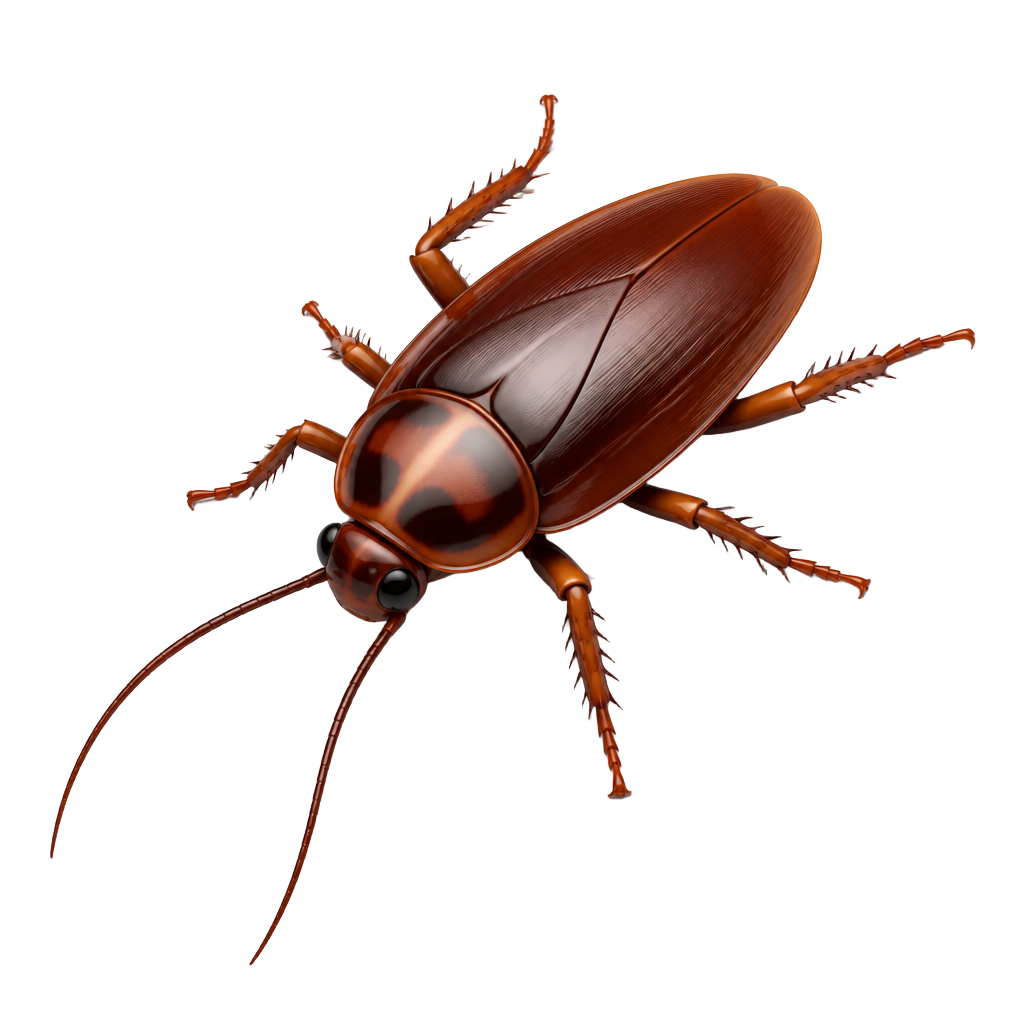
At a glance
- Category
- insect
- Seasonal activity
- Year-round indoors; outdoor species peak in warm months.
- Life cycle
- Egg case (ootheca) → nymph → adult. Some species produce 300+ offspring per year.
- Common locations
- Kitchens · Bathrooms · Basements · Behind appliances · Drains
- Also known as
- roaches, waterbugs
Entity relationships
Parent entity
Child entities
Related entities
Key attributes
Risk profile
A quick read on how this pest scores across the four factors that matter most.
- Health risk
- High
- Property damage
- Low
- Spread potential
- High
- Treatment difficulty
- High
Seasonal activity
When this pest is most active across the calendar year.
Identification & habitat
Confirm what you're dealing with before choosing a treatment path.
How to identify
- Oval, flattened bodies with long antennae
- Fast, darting movement when exposed to light
- Egg cases (ootheca) in dark cracks
- Peppery droppings in cabinets and drawers
Where they live
- Kitchens
- Bathrooms
- Basements
- Behind and under appliances
- Sewers and drains
Signs of infestation
- Pepper-like droppings
- Egg cases in dark cracks
- Musty odor in heavy infestations
- Live sightings at night
Diet
- Grease and starches
- Pet food
- Book bindings and paper
- Decaying matter
Behavior
- Aggregate around pheromones in dark harborage
- Feed at night
- Can flatten to 1/16" to enter cracks
Reproduction
Females produce 6–8 egg cases in a lifetime; each hatches 12–40 nymphs.
Life cycle timeline
Every treatment plan must reach every stage — miss one, and the population rebuilds.
- Stage 114–100 days
Ootheca (egg case)
Purse-shaped case holds 12–40 eggs.
- Stage 26 weeks – 6 months
Nymph
Wingless, molts 5–13 times.
- Stage 36–24 months
Adult
Reproductive stage; produces new egg cases every 20–60 days.
Health risks
- Asthma and allergy triggers
- Salmonella and E. coli contamination
- Dysentery pathogens
Property damage
- Contamination of stored food
- Damage to paper goods and book bindings
Inspection checklist
- Flashlight inspection of cabinet hinges and voids at night
- Sticky monitors behind fridge, dishwasher, and stove
- Inspect drain lines and pipe chases
- Check cardboard storage in pantries and closets
Professional treatment
The proven, licensed protocol our specialists use in the field.
- 1
Sanitation audit
Identify and remove food, water, and harborage.
- 2
Gel bait placements
Small dabs in every harborage — rotate active ingredients.
- 3
Insect growth regulators
Stops nymph development so populations collapse.
- 4
Monitor + follow-up
Sticky traps quantify decline; re-treat at 14 and 30 days.
You can handle
- Sanitation basics: seal food, empty trash daily, fix leaks
- Store-bought gel bait for a single sighting
Get professional help
- More than one sighting per week
- Any German cockroach evidence
- Multi-unit or shared-wall properties
What changes the price
- Species (German is hardest)
- Infestation level
- Sanitation cooperation
- Structural harborage
Prevention
Small habits keep cockroaches from coming back after treatment.
Prevent cockroaches
- Fix leaks and eliminate standing water
- Store food in sealed containers
- Empty trash daily and clean drains
- Seal cracks and gaps around pipes
Commonly confused with
Quick tells to separate cockroaches from lookalikes.
vs. Water bugs (true)
Aquatic beetles, not roaches — larger and don't infest homes.
vs. Beetles
Hard wing covers meet in a straight line; roaches have overlapping leathery wings.
Common myths
Bad advice makes infestations worse — here's the truth.
Roaches only invade dirty homes.
German roaches ride in on grocery bags, boxes, and used appliances — cleanliness alone won't keep them out.
One bomb fogger clears them out.
Foggers scatter roaches deeper into voids and rarely reach egg cases.
Frequently asked
Answers to the questions homeowners ask most about cockroaches.
Are cockroaches actually a health risk?
Yes. They carry salmonella and shed allergenic proteins that are a leading trigger of childhood asthma.
How long to eliminate an infestation?
German cockroach programs typically take 6–10 weeks with monitored follow-ups.
Do foggers or bombs work?
Almost never — they push roaches into deeper voids and leave egg cases untouched.
Call a pro immediately if…
- Multiple sightings in daylight
- Live nymphs in appliances
- Asthmatic residents in the home
Answer your next question
Related Services
Related Costs
Related Calculators
Related Locations
Related Questions
Ready when you are
Deal with cockroaches the right way
Get a licensed pest specialist to handle it — often same-day, with a satisfaction guarantee.